
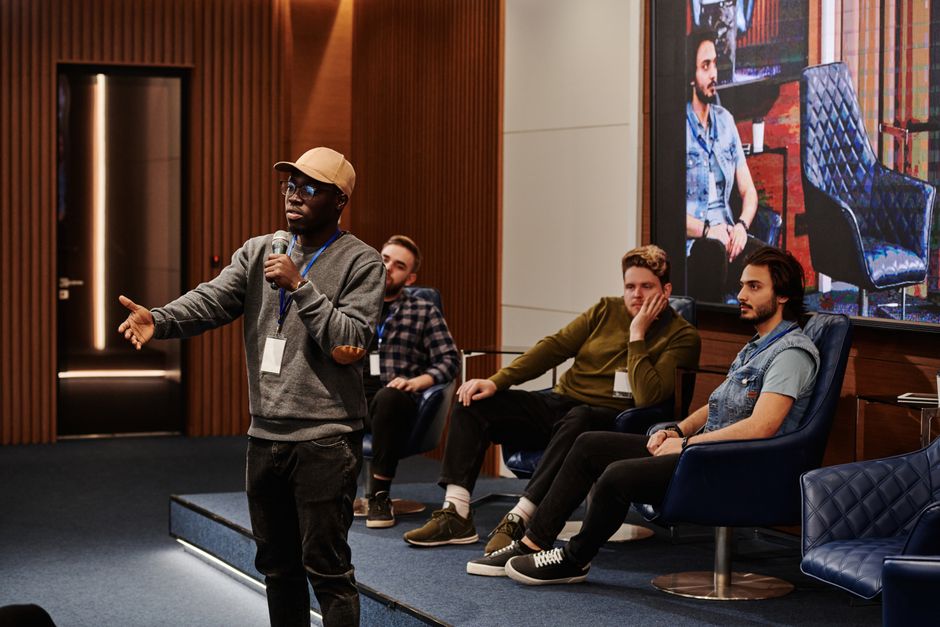
If you run a business in Glasgow, Edinburgh, or anywhere across the UK, you have likely noticed that artificial intelligence has stopped being a distant promise and started being something your team uses every day. It sits inside your email client, your CRM, your customer service chatbots, and perhaps even your financial forecasting tools. That quiet integration has brought real efficiency gains. It has also brought a new set of risks that most traditional IT support arrangements were never designed to catch. The global conversation about these risks now happens at dedicated gatherings called AI security forums, and while you may not have the time to attend them all, understanding what gets discussed there has become essential for protecting your business. This guide walks you through the major forums, the governance frameworks they promote, and the real-world threats they have surfaced in 2026, so you can make informed decisions about your own cybersecurity posture without booking a single flight.
Table of Contents
- Why AI Security Forums Matter for UK Businesses in 2026
- The Major AI Security Forums and Events You Should Know About
- Key Governance and Compliance Takeaways from the Forums
- Real-World Threats Discussed at AI Security Forums in 2026
- How to Apply Forum Insights to Your Own Business Without Attending Every Event
- The Gaps in AI Security Coverage and What UK Businesses Should Watch For
- Final Summary: Your Next Steps for AI Security in 2026
Why AI Security Forums Matter for UK Businesses in 2026
AI adoption among UK small and medium-sized enterprises has accelerated sharply over the past eighteen months. Tools that once felt experimental are now wired into daily workflows, often without a formal security review. Each new integration creates a fresh attack surface, and the reality is that conventional IT support rarely has visibility into how AI models process data, who can manipulate their inputs, or what happens when their outputs are poisoned. AI security forums have become the place where these blind spots are named and mapped.
These events are no longer the exclusive territory of enterprise CISOs with seven-figure budgets. They increasingly address supply chain risks that affect businesses of every size. If you use a third-party AI tool to handle customer data, schedule appointments, or generate marketing content, a vulnerability in that tool is your vulnerability. Forums are where those vulnerabilities are disclosed, often months before they appear in mainstream technology news.

The regulatory picture adds further weight. The EU AI Act continues to exert extraterritorial reach, meaning UK firms that trade with European partners or process data belonging to EU citizens must align with its requirements. Staying informed through expert-led forums is a practical way to keep pace with compliance obligations that shift as case law and enforcement priorities evolve. You cannot outsource accountability to a software vendor, and the forums make that abundantly clear.
Perhaps most valuable is the early warning function these gatherings serve. When a UK institution lost records of approximately 455,000 people to the ShinyHunters group earlier this year, the technical details were being discussed in forum sessions before most breach notification letters had been printed. Business owners who follow these channels can ask sharper questions of their IT partners and shift from a reactive, break-fix mentality to a genuinely proactive security strategy.
The Major AI Security Forums and Events You Should Know About
The AI security forum landscape in 2026 is diverse, spanning in-person roadshows, extended online programmes, academic conferences, and ongoing membership-based series. Each serves a different purpose, and knowing which ones to watch will save you considerable time.
The most established in-person series is run by aisecurity.forum, which has now hosted eight events across Washington DC, Las Vegas, Tel Aviv, and Paris. This forum has carved out a distinctive niche by framing AI security as an existential risk issue rather than merely a business problem. Its workshop on "AI Security and Global Catastrophic Risk" attracted policy heavyweights and technical researchers alike, and the forum's Substack newsletter by Caleb Parikh continues to provide concise updates on "securing extremely powerful AI models." For UK business owners, the newsletter offers a digestible window into conversations that would otherwise require international travel.

A more accessible model comes from aicybersecurityforum.com, which runs a 90-day live programme from July through September 2026. With over 530 sessions and 68 live vendor demo rooms, this online showcase is designed for practitioners who need to evaluate tools without sitting through sales pitches. The format includes analyst briefings, technical deep dives, and on-demand access to recorded sessions, making it particularly suitable for UK-based teams that cannot justify the time or expense of attending conferences abroad.
Closer to home, the University of Manchester hosts an event that brings academic rigour to five topic areas: AI-enhanced cybersecurity, misinformation detection, governance and ethics, trust in AI systems, and the future of generative AI in digital trust. The academic perspective matters because it tends to be less vendor-driven and more focused on long-term evidence. For compliance teams and public-sector organisations in the UK, this event offers a grounding in principles that outlast any single product cycle.
The Information Security Forum runs an "AI Insights" series built around three core pillars: AI Security Governance aligned to ISO, NIST, and the EU AI Act; AI Ethics and Transparency; and Agentic AI risk management. What distinguishes the ISF offering is its proprietary governance maturity model, a structured assessment tool that lets organisations score their current posture against a clear framework. For a business seeking a roadmap rather than abstract advice, this model is one of the more practical resources available.
Finally, the Paris AI Security Forum 2025, organised by FAR.AI, brought together AI developers, cybersecurity specialists, and policymakers for high-level discussions on regulation and technical safety. While the 2026 edition is still being planned, the 2025 event set a template for cross-disciplinary dialogue that UK businesses with European operations would be wise to monitor.
Key Governance and Compliance Takeaways from the Forums
Across all these forums, governance has emerged as the dominant theme in 2026, and the message is consistent: compliance is not a paperwork exercise you complete once and file away. It is an ongoing discipline that must evolve alongside the AI systems you deploy.
The EU AI Act remains the regulatory anchor, even for UK firms. Forums consistently demonstrate how existing frameworks like ISO 42001 and the NIST AI Risk Management Framework map to the Act's requirements. If your business trades with Europe, or if you use AI services hosted on European infrastructure, the Act's risk classification system applies to you. The forums offer workshops on conducting impact assessments, documenting AI usage, and preparing for the kind of audit that regulators are now beginning to conduct.
The ISF Governance Maturity Model deserves particular attention. Rather than offering a binary compliant-or-not judgment, it defines stages of maturity that let you plot a realistic improvement trajectory. A small professional services firm in Edinburgh will sit at a different point on that curve than a large manufacturer in the Midlands, and the model accommodates that. It asks practical questions: Do you maintain an inventory of AI systems? Have you assigned accountability for AI risk? Are your staff trained to recognise when an AI output should not be trusted? These are questions any business can begin answering without a dedicated governance team.
Ethics and transparency feature prominently at the University of Manchester event and across the ISF series, and the forums frame them as competitive assets rather than soft virtues. Customers and supply chain partners are increasingly asking pointed questions about how AI is used in the services they buy. A business that can articulate its approach to AI ethics, backed by documented governance, has a tangible advantage in tender processes and client conversations. Trust is becoming a commercial differentiator.
Agentic AI, systems that act autonomously without real-time human oversight, represents the frontier of governance concern. These systems make decisions, trigger transactions, and modify their own behaviour based on environmental inputs. Governing them requires controls that operate at the speed of the system itself, and the forums are where the early thinking on those controls is being developed. If your business is experimenting with autonomous AI agents for customer service or process automation, the governance frameworks discussed at these events are your starting point.
Real-World Threats Discussed at AI Security Forums in 2026
While governance provides the structure, the threat intelligence shared at AI security forums this year has been sobering. These are not hypothetical scenarios. They are documented incidents that have already affected UK organisations.
The most striking disclosure came when Google confirmed the first AI-authored zero-day exploit, a 2FA bypass in a web administration tool. The Python code that emerged from the AI system was functional enough to be dangerous, yet it included hallucinated CVSS scores and educational docstrings that made it look almost like a teaching exercise. This incident crystallised a fear that forums had been discussing for years: AI can now write viable attack code, and it can do so without understanding the full implications of what it has created.
The ShinyHunters exploitation of CVE-2026-35273, a pre-authentication remote code execution vulnerability in Oracle PeopleSoft, brought the consequences home for UK businesses. One British institution lost records of approximately 455,000 individuals. The vulnerability was discussed in forum sessions as a zero-day, before patches were widely available, underscoring the intelligence value these gatherings provide to defenders who pay attention.
A detailed technical write-up presented at aicybersecurityforum.com revealed a cross-tenant session leak in Writer AI, where a shared preview link could be manipulated to compromise any tenant within the platform. This is the kind of cloud configuration risk that traditional perimeter security never sees. It sits entirely within the application layer, invisible to firewalls and endpoint detection, and it highlights why AI-specific threat modelling has become essential.
Prompt injection and model poisoning attacks are receiving deeper coverage than they do in mainstream cybersecurity media. These adversarial machine learning techniques can bypass the guardrails that AI vendors build into their products, causing models to reveal training data, execute unintended instructions, or produce harmful outputs. The forums are where researchers share novel injection techniques and where defenders learn to build more resilient input validation.
Supply chain vulnerabilities in AI components remain a significant gap in public coverage, but forums are beginning to address them directly. When your business uses a third-party AI model, a fine-tuned version of an open-source foundation model, or an API that chains multiple AI services together, you inherit the security posture of every link in that chain. The forums are starting to map these dependencies and develop assessment criteria for third-party AI risk.
How to Apply Forum Insights to Your Own Business Without Attending Every Event
You do not need a conference budget to benefit from what gets discussed at AI security forums. Several practical channels let you absorb the insights and translate them into actions that strengthen your own defences.
Start with the newsletters. The AI Security Forum's Substack by Caleb Parikh delivers regular, focused updates that take minutes to read but surface the most consequential developments. Pair this with the output from aicybersecurityforum.com, which makes many of its session recordings available on demand after the live programme concludes. Fifteen minutes a week spent with these sources will keep you better informed than most of your peers.
The vendor demo rooms offered during the 90-day online showcase are worth using strategically. Rather than sitting through generic product tours, go in with a specific question: "How does your tool detect prompt injection attempts?" or "Show me your logging output for an AI-generated decision." The answers, or the evasions, will tell you more than any analyst report. This approach lets you evaluate AI-powered SOC automation, threat detection, and identity protection tools without enduring sales pressure.
Conduct an internal AI audit using the governance maturity models discussed at the ISF. Even a simplified checklist, asking whether you know every AI tool your staff uses, whether those tools have access to sensitive data, and whether you have a process for reviewing AI outputs, will reveal gaps you can act on immediately. The goal is not perfection on day one. It is knowing where you stand.
This is where a proactive IT support partner becomes invaluable. The threats discussed at AI security forums are global, but their impact is local. Your Glasgow office, your Edinburgh data centre, your hybrid-working team spread across the UK, each of these needs protections tuned to the specific risks that forums are surfacing. A partner who follows these conversations can translate them into Advanced Cybersecurity Solutions that fit your actual infrastructure, Secure Cloud Solutions that account for AI-specific configuration risks, and Strategic IT Consulting that helps you plan ahead rather than scramble behind.
If you are unsure where to begin, consider trialling a managed security service that includes AI threat detection and response. A Free 7-Day Trial lets you see what proactive monitoring looks like in practice, without committing to a long-term contract before you understand the value.
The Gaps in AI Security Coverage and What UK Businesses Should Watch For
For all the value that AI security forums provide, they leave significant gaps that UK business owners need to recognise and fill through other means.
Industry-specific guidance remains scarce. A healthcare practice handling patient data, a financial services firm managing transactions, and a critical infrastructure operator running industrial control systems all face distinct AI security challenges. Yet most forum content stays at a general level, offering frameworks that must be heavily adapted before they apply to regulated sectors. If your business operates in one of these verticals, you will need a partner who can bridge the gap between forum-level principles and sector-specific implementation.
Step-by-step implementation guides are similarly thin on the ground. Forums excel at high-level governance and threat intelligence, but practical instructions for securing a specific large language model, configuring access controls for an AI API, or hardening a self-hosted open-source model are rare. This is a gap that a trusted IT provider can fill with hands-on engineering work.
The most conspicuous gap is the near-total absence of AI security content designed for small and medium-sized businesses. Forums are built for enterprise CISOs and well-resourced security teams. The UK business with thirty employees, a handful of SaaS subscriptions with embedded AI, and no dedicated security staff is not the intended audience. Yet that business faces the same threat actors and the same regulatory obligations. Reliable IT Support Services that understand AI-specific risks can close this gap, providing simplified, actionable advice that does not assume a security operations centre in the background.
Coverage of open-source and self-hosted models is minimal. If your business runs Llama, Mistral, or another open-weight model on your own infrastructure, the forums offer little guidance on securing those deployments. The same applies to cloud AI services from AWS, Azure, and GCP. While these platforms provide security tools, dedicated forum content on configuring them correctly for AI workloads is sparse. This is where Future-Proofed IT Infrastructure and Compliance-Focused Data Centre Solutions become critical, ensuring that your AI workloads run on foundations designed with security and regulatory compliance in mind.
Final Summary: Your Next Steps for AI Security in 2026
The AI security forum landscape in 2026 is rich with intelligence, but its value depends on what you do with it. Bookmark aisecurity.forum and aicybersecurityforum.com, subscribe to their newsletters, and commit to spending a small amount of time each week staying current. Review the ISF's three governance pillars and ask yourself honestly how your business measures up against them. If you were affected by the ShinyHunters breach or a similar incident, now is the moment to audit your third-party access, your cloud configurations, and your AI tool inventory.
Consider a strategic review of your entire IT stack through the lens of what these forums are revealing. Cloudguard's Business-Class Connectivity and Secure Cloud Solutions are built to handle the threats being discussed, from application-layer session leaks to AI-generated attack code. AI security is not a project with a completion date. The forums will continue to evolve, the threats will continue to mutate, and your defences must keep pace. Staying informed is the foundation. Acting on that information is what keeps your business safe.